Barrier-Free World



Where did Braille come from?
Braille has been an effective means of communication for people who are blind since
1829 when it was invented in Paris, France by Louis Braille. Louis Braille lost his sight
at the age of three as a result of an injury. As a young boy at school, he became
frustrated with the large and bulky raised letter alphabet used to learn reading and
writing skills. In 1821, a soldier named Charles Barbier de la Serre visited Louis'
school. He brought with him a system he had invented called "night writing". Night
writing had originally been designed so that soldiers could pass instructions along
trenches at night without having to talk and give away their position. After many years
of experimenting, Louis modified the concept of night reading to become a successful
reading and writing system that today is used around the world.
How does Braille work?
Braille was developed using cells to indicate numbers and letters.
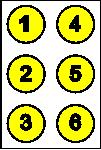
Each cell has the potential of six dots in two columns. There are 64
combinations of the dots within each cell — more than enough to do
the alphabet, basic numbering, and punctuation.
Braille is a tactile form of communication. The dots used for Braille
are raised so the person can feel them. By the mid-1960's the
segregation of blind students into separate schools began to decrease
and with this change in the educational structure, the use of Braille also began to
decrease. With the onset and proliferation of electronic media, the use of Braille has
decreased to a level that only approximately 6% of people who are blind can read Braille.
The following is an example of the Braille Alphabet. The circles in black represent the
raised dots a person would feel when reading Braille. The white circles are only used
here to help you find placement within the cell for each letter.
Braille has been an effective means of communication for people who are blind since
1829 when it was invented in Paris, France by Louis Braille. Louis Braille lost his sight
at the age of three as a result of an injury. As a young boy at school, he became
frustrated with the large and bulky raised letter alphabet used to learn reading and
writing skills. In 1821, a soldier named Charles Barbier de la Serre visited Louis'
school. He brought with him a system he had invented called "night writing". Night
writing had originally been designed so that soldiers could pass instructions along
trenches at night without having to talk and give away their position. After many years
of experimenting, Louis modified the concept of night reading to become a successful
reading and writing system that today is used around the world.
How does Braille work?
Braille was developed using cells to indicate numbers and letters.
Each cell has the potential of six dots in two columns. There are 64
combinations of the dots within each cell — more than enough to do
the alphabet, basic numbering, and punctuation.
Braille is a tactile form of communication. The dots used for Braille
are raised so the person can feel them. By the mid-1960's the
segregation of blind students into separate schools began to decrease
and with this change in the educational structure, the use of Braille also began to
decrease. With the onset and proliferation of electronic media, the use of Braille has
decreased to a level that only approximately 6% of people who are blind can read Braille.
The following is an example of the Braille Alphabet. The circles in black represent the
raised dots a person would feel when reading Braille. The white circles are only used
here to help you find placement within the cell for each letter.
| Braille |
| We are continuously updating this site. If you have suggestions or questions please email us at info@sterlingfrazer.com |
| Some information on this page is courtesy of the International Braille Research Center, Baltimore, MD and the National Braille Press, Boston, MA. |
Numbers are indicated by placing a cell with dots in positions 3, 4, 5, & 6 before letters
"a" through "j" to indicate "1" through 0".
A period is indicated by a dot in position 6.
"a" through "j" to indicate "1" through 0".
A period is indicated by a dot in position 6.


 |
| |
 |
| |
 |
| |
 |
| |
 |
| |
 |
| |
 |
| |
 |
| |
 |
| |
 |
| |
 |
| |
 |
| |
 |
| |
 |